
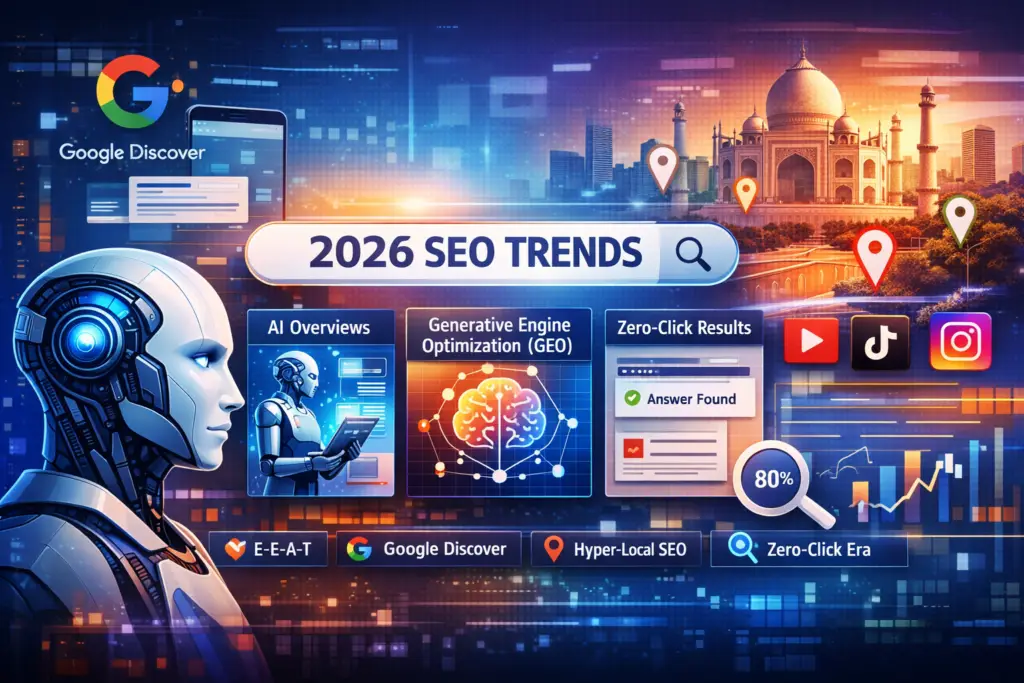
January 2026 represents a clear shift in how search visibility is earned. SEO has moved beyond keyword rankings and backlinks into a broader system where AI engines, discovery feeds, and brand authority play a central role.
Search engines are now answer-focused. Users increasingly receive information through AI-generated summaries, Google Discover feeds, and social platforms without clicking traditional results. For businesses and website owners in India, understanding these changes early is essential for staying visible and relevant.
At Clicklyticx, we help brands move beyond outdated SEO tactics and build visibility strategies designed for AI-driven search, zero-click discovery, and high-intent users.
This guide explains what is changing in January 2026 and how you can turn these changes into real leads and revenue.
Generative Engine Optimization (GEO)
Generative Engine Optimization focuses on optimizing content for retrieval and citation by large language models and AI-powered search experiences.
Instead of ranking pages alone, AI systems extract and summarize information from multiple trusted sources. Visibility is measured by how often a brand or page is referenced within AI-generated answers.
Key characteristics of GEO
- Content structured around entities and topics, not isolated keywords
- Clear, factual explanations supported by original insights
- Strong topical depth that helps AI systems identify authority
Google Algorithm and Platform Updates (January 2026)
In January 2026, Google reinforces quality and usefulness signals while removing support for Practice Problem and Dataset structured data from Search Console reporting and rich result testing.
This change indicates a move away from niche or rarely used schema formats and toward broader content clarity and experience signals.
What this means for websites
- Structured data should be purposeful and user-focused
- Thin or repetitive content is more likely to be ignored
- Clear site architecture and internal linking remain important
AI-Powered Search and Changing User Behavior
AI-powered search experiences, including AI Overviews and conversational search, now dominate informational queries. Users ask longer, more specific questions and expect complete answers instantly.
This has reduced reliance on traditional click-through behavior and increased the importance of content that satisfies intent fully.
Emerging patterns
- Fewer clicks, but higher-quality engagement
- Greater importance of clarity and completeness
- Content designed to conclude the user’s search journey
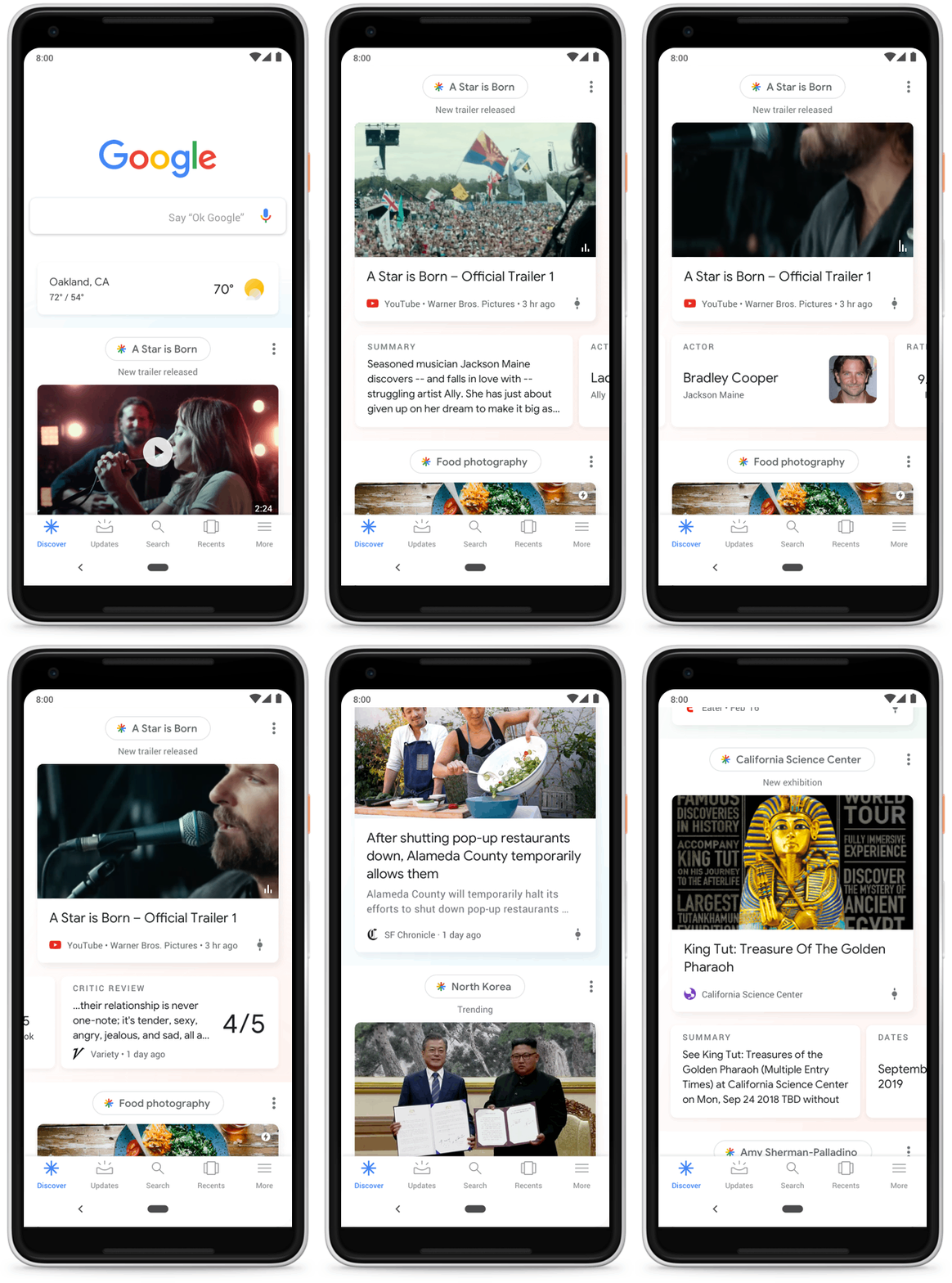
Google Discover Optimisation – SEO Trends January 2026
Google Discover has become one of the most influential traffic channels, particularly on mobile devices in India.
Discover does not rely on direct searches. Instead, it surfaces content based on user interests, engagement history, and topical authority.
Discover-friendly content traits
- Fresh, timely topics with clear relevance
- Strong visuals with a minimum width of 1200 pixels
- Headlines written for curiosity and clarity
- Consistent publishing within defined subject areas
Zero-Click Searches and Visibility Without Clicks
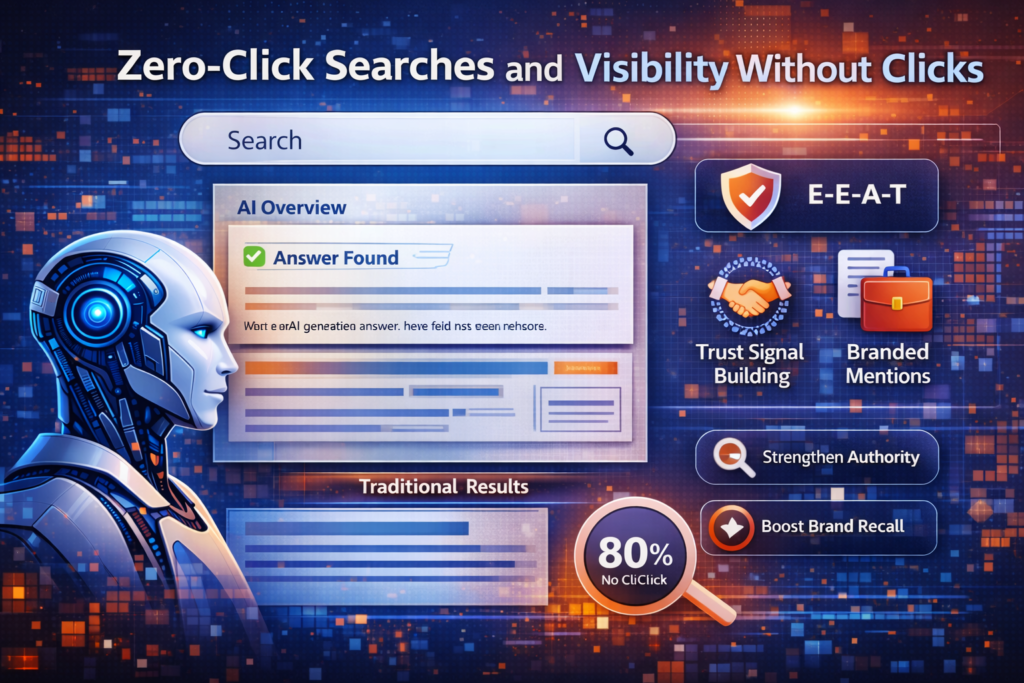
By January 2026, a large share of informational searches ends directly on the results page through AI summaries, featured snippets, and knowledge panels.
While traffic may decrease, brand exposure and recall increase when content appears repeatedly in these surfaces.
Strategic implications
- Visibility is no longer tied only to visits
- Brand recognition becomes a core SEO outcome
- Authority signals matter more than page-level optimization
The Role of E-E-A-T and “Human-Proof” Content
Experience, Expertise, Authoritativeness, and Trust remain foundational, but January 2026 places stronger emphasis on what AI cannot easily replicate.
Human-proof content includes first-hand experience, original research, real examples, and expert perspectives.
Content that performs well
- Case studies and experience-based articles
- Original data, insights, and observations
- Clearly identified authors with credentials
Search Everywhere Optimization
Search behaviour has expanded beyond traditional search engines. Platforms like YouTube, TikTok, and Instagram now act as discovery engines, especially for younger users.
SEO strategies increasingly consider visibility across multiple platforms.
Common characteristics
- Video and visual-first content formats
- Platform-specific keyword and topic optimization
- Consistent brand and messaging across channels
Hyper-Local SEO in India
Local SEO has evolved into hyper-local discovery. Results are shaped by proximity, real-time updates, reviews, and AI-driven recommendations.
Google Business Profile activity plays a central role in how local results are generated and ranked.
Key focus areas
- Frequent and accurate business updates
- Location-specific content and context
- Review volume, freshness, and responses
Mobile-First Indexing, Voice Search, and Page Experience
Mobile usage continues to dominate in India, and voice-based queries are increasingly common. Page experience still influences trust and usability, even if it is not a primary ranking factor.
Ongoing priorities
- Fast-loading, stable mobile pages
- Conversational content for voice queries
- Clear navigation and readable layouts
SEO Performance Metrics in 2026
Traditional SEO metrics are being replaced or supplemented by new indicators of success.
| Traditional Metric | 2026-Focused Metric |
|---|---|
| Keyword rankings | AI citation frequency |
| Traffic volume | Intent density |
| Backlink count | Entity authority |
| Click-through rate | Session completion signals |
These metrics better reflect how users interact with content in AI-driven search environments.
About Clicklyticx
Clicklyticx is a digital marketing and SEO agency in India that focuses on modern search strategies aligned with AI-powered discovery, Google Discover visibility, and evolving user behaviour.
The agency’s work emphasizes technical clarity, content quality, and long-term authority rather than short-term ranking tactics.
Conclusion
SEO in January 2026 is defined by Generative Engine Optimization, omnichannel discovery, and trust-driven content. Visibility now depends on how clearly a brand is understood and referenced by AI systems, not just how well a page ranks.
Businesses that adapt to these changes will maintain relevance as search continues to evolve. Those that rely only on outdated tactics will find it increasingly difficult to stay visible in a zero-click, AI-first search landscape.
This shift makes January 2026 a critical moment for understanding how SEO truly works today.
One Response